
When Staying Informed Starts to Cost You
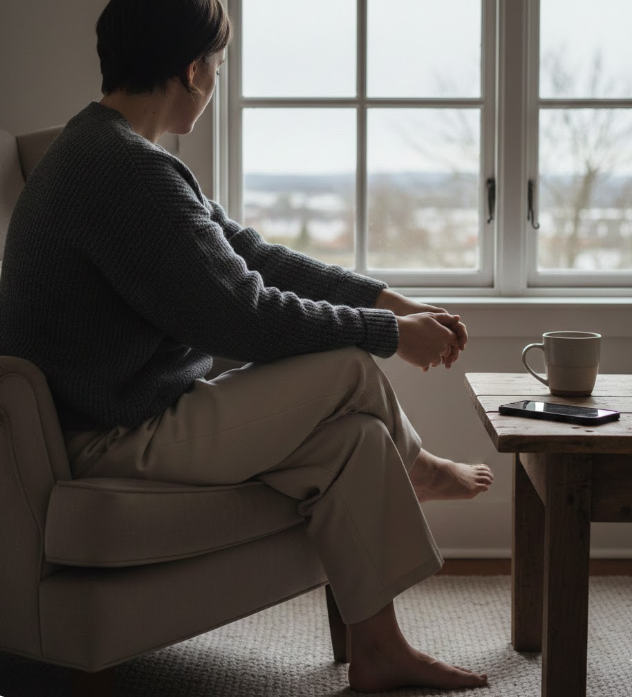
There is a difference between being informed and being overwhelmed.
Many people cross that line without realizing it until their body starts to protest.
If you feel pulled to keep checking the news, social media, or updates even when it leaves you tense, exhausted, or numb, that is not a lack of discipline. It is a nervous system trying to stay ahead of danger.
This piece is not about disengaging from the world. It is about noticing when staying informed begins to cost more than it gives.

Awareness Is Not the Same as Exposure
Being informed is often framed as a moral responsibility. Pay attention. Stay engaged. Do not look away.
But awareness does not require constant exposure. Knowing what is happening does not mean you need to absorb every detail, every update, or every reaction in real time.
For nervous systems shaped by chronic stress or marginalization, repeated exposure to harm can feel less like information and more like reenactment. The body does not distinguish between witnessing and experiencing when the threat feels relevant.
Awareness can exist without saturation.

How Overexposure Shows Up in the Body
When staying informed starts to cost you, the signs often appear physically before they become conscious.
You might notice:
A constant sense of alertness or bracing
Difficulty sleeping or settling
Irritability or emotional numbing
Trouble focusing on everyday tasks
A feeling of being behind or never caught up
These are not failures of resilience. They are signals of overload.
The nervous system has limits, even when the cause is important.

The Pull to Keep Watching
For many people, especially queer and trans adults, staying informed is tied to safety. Information can feel like protection. If I know what is happening, I can prepare.
That logic makes sense in environments where danger has been unpredictable or personal. The problem is that constant vigilance rarely delivers the safety it promises. Instead, it keeps the body in a state of ongoing readiness.
At some point, preparation turns into depletion.
Noticing that shift is not avoidance. It is discernment.

Choosing When and How Much Is an Act of Care
Stepping back does not mean you do not care. It means you are protecting your capacity to care at all.
Orientation includes choice. When to engage. When to pause. When to let information come through trusted filters instead of direct exposure.
Some people benefit from:
Limiting how often they check the news
Choosing one or two reliable sources instead of many
Avoiding comment sections that escalate emotion
Taking breaks after particularly heavy updates
These are not rules. They are experiments in sustainability.

Staying Oriented Without Going Numb
The goal is not to feel calm or detached. It is to stay connected without flooding.
If you notice yourself becoming numb, cynical, or shut down, that is another sign the system has gone past capacity. Orientation asks a different question. What helps me stay present without overwhelming myself?
Sometimes that means stepping away so you can come back later with more clarity.

Why This Matters for Queer and Trans People
For queer and trans communities, staying informed is often about survival. Laws, policies, and public sentiment can have immediate personal consequences.
That reality makes it harder to step back. It can feel dangerous to look away.
At the same time, constant exposure to harm directed at people like you carries a unique toll. It reinforces vigilance and can erode a sense of internal safety over time.
Choosing how and when to engage is not disengagement from community. It is a way of preserving yourself within it.

A More Sustainable Relationship With Information
Being informed does not require being inundated. Caring does not require constant consumption.
A sustainable relationship with information allows room for rest, connection, and ordinary life alongside awareness. It recognizes that your nervous system is part of the equation.
Staying oriented includes knowing when enough is enough for now.
A Grounded Ending
If staying informed has started to cost you your sleep, your focus, or your sense of steadiness, that is worth listening to.
You are allowed to choose how much you take in.
You are allowed to protect your capacity.
You are allowed to stay oriented without absorbing everything at once.
This is not withdrawal.
It is care.
If you would like support in finding a more sustainable relationship with information and uncertainty, you are welcome to schedule a consultation.
