
Why Do I Feel So Drained After Socializing? Understanding Social Exhaustion, Masking, and the Nervous System
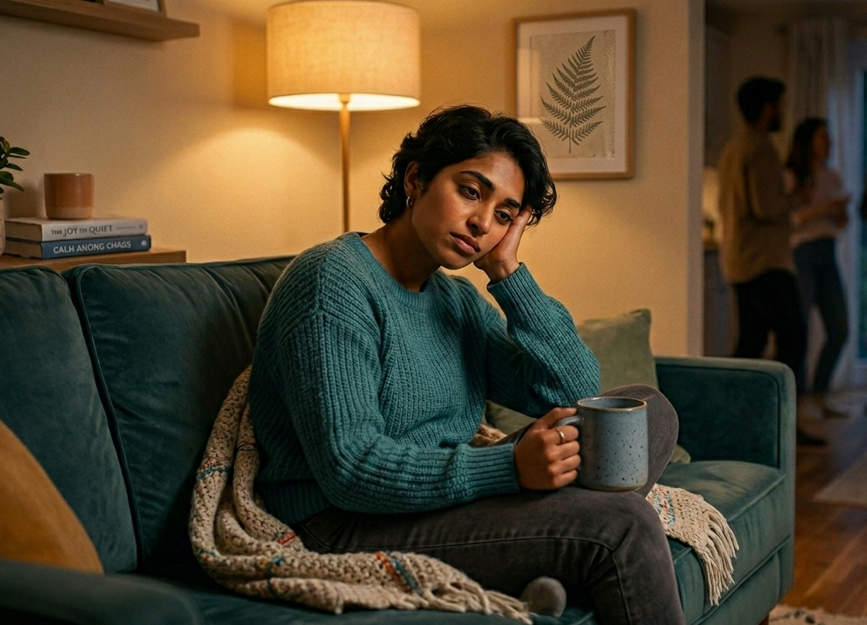
You spend time with people you genuinely like.
Nothing bad happens. No conflict. No tension.
And still, when it’s over, you feel completely drained.
Sometimes it hits right away.
Sometimes it shows up later when you finally sit down and realize how tired you actually are.
If you’ve ever thought,
“Why am I so exhausted after being around people?”
you’re not alone.
This isn’t about being antisocial or “too sensitive.”
A lot of the time, this is about your nervous system working overtime in ways you might not even realize.
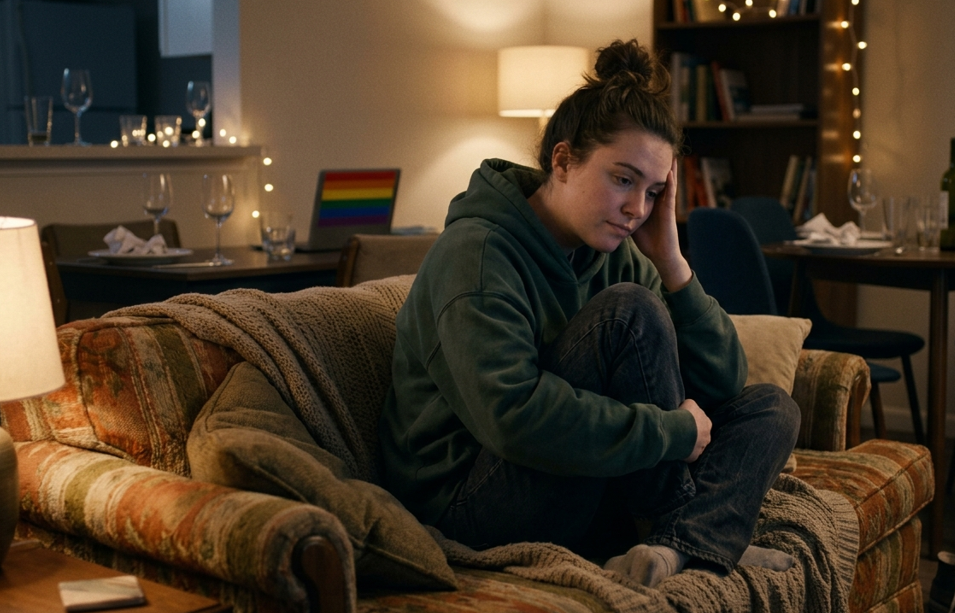
What Social Exhaustion Actually Is
Social exhaustion isn’t just about being “tired of people.”
It’s the kind of fatigue that comes from:
monitoring how you’re coming across
reading the room
adjusting your responses
staying engaged even when your energy is dipping
Your brain is processing a lot at once.
And your body is working just as hard.
Even in safe or enjoyable environments, your system may still be asking:
Am I okay here? Do I belong? How am I being perceived?
That level of awareness adds up.
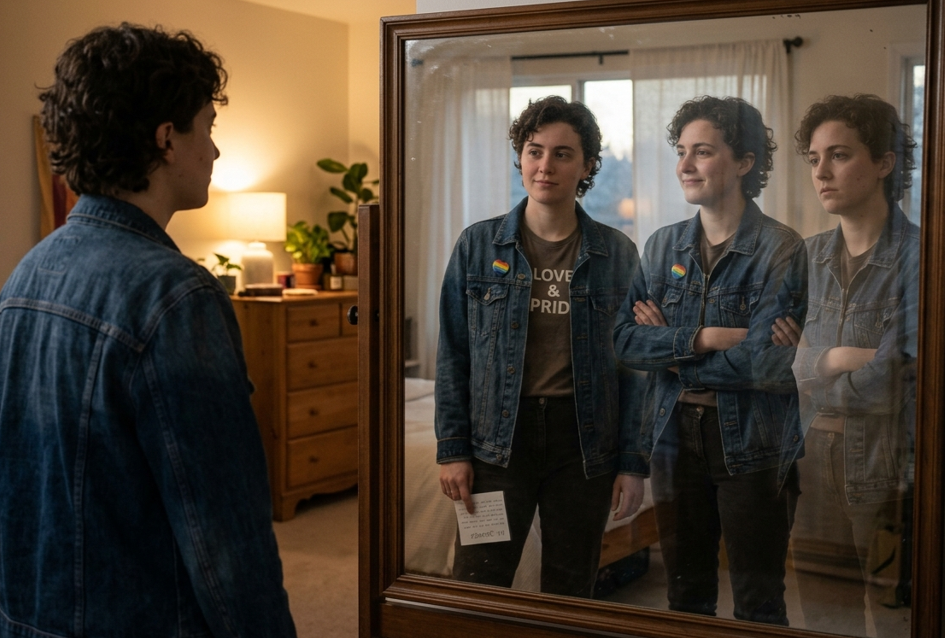
The Role of Masking and Code-Switching
For many LGBTQIA+ people, socializing isn’t just socializing.
It can also involve:
deciding what parts of yourself feel safe to share
adjusting language, tone, or behavior
scanning for cues about acceptance or rejection
This is often called masking or code-switching.
It’s not a flaw. It’s an adaptation.
Your system learned how to stay safe in environments where being fully yourself wasn’t always guaranteed.
The downside is that masking takes energy.
A lot of it.
And even when you’re in spaces that are more accepting, your nervous system doesn’t always update right away.
So it keeps doing what it learned to do.
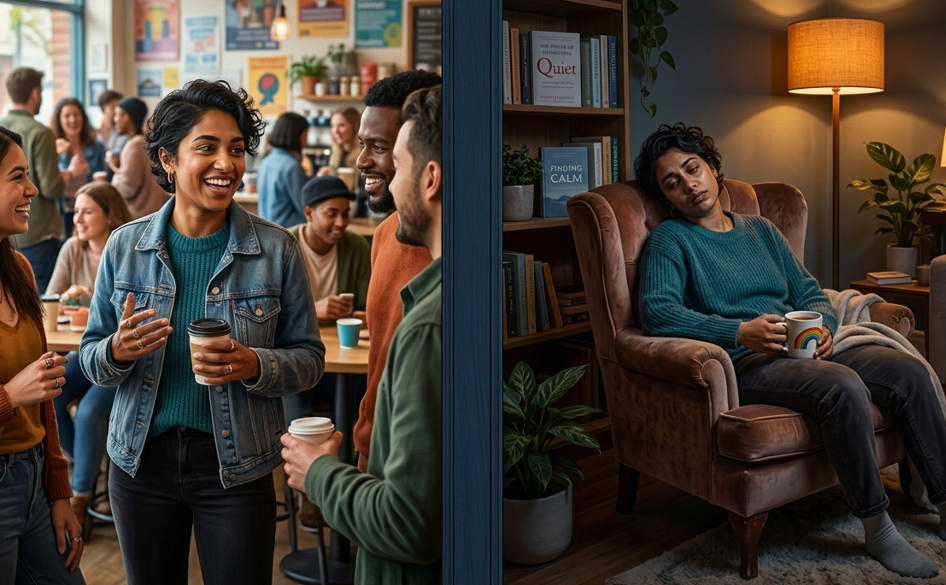
Your Nervous System Might Still Be “On”
Even if nothing goes wrong socially, your nervous system can still stay activated.
That can look like:
being alert and attentive the entire time
difficulty fully relaxing in conversation
staying “on” until you leave
When your system is in that state, it uses more energy.
So when you finally get home or step away, your body drops out of that activation.
And that’s when the exhaustion hits.
This isn’t weakness.
It’s your body completing a cycle it didn’t get to finish earlier.

You Can Enjoy People and Still Need Space
This part matters.
Feeling drained after socializing doesn’t mean:
you don’t like people
you chose the wrong relationships
something is “wrong” with you
You can enjoy connection and still need recovery time.
Both can be true.
The goal isn’t to force yourself to socialize more or less.
It’s to start noticing:
what environments feel easier on your system
who you feel more relaxed around
how much time feels sustainable for you
Your capacity is allowed to be what it is.
A Gentle Next Step
You don’t have to overhaul how you socialize.
You can start smaller than that.
Try noticing:
when your energy starts to dip
what your body feels like in different social settings
how long it takes you to recover afterward
Not to judge it. Just to understand it.
Because when you understand your patterns, you can start making choices that actually support you.
If this is something you’ve been navigating, therapy can be a space to explore it without pressure to “fix” yourself.
Just to understand how your system works and what it needs.
You can learn more or schedule a consultation here.
