
You’re Not Too Sensitive: Why Pattern Awareness Is a Trauma-Adjacent Survival Skill

If you’ve ever been told you’re “too sensitive,” “overthinking,” or “reading too much into things,” I want to pause right here and say this clearly:
You’re not broken.
You’re not dramatic.
And you’re not imagining things.
You’re pattern-aware in a world that keeps proving the patterns matter.
For many LGBTQIA+ adults, especially those who grew up in environments where safety, acceptance, or belonging were inconsistent, noticing patterns wasn’t a personality quirk — it was a survival skill.
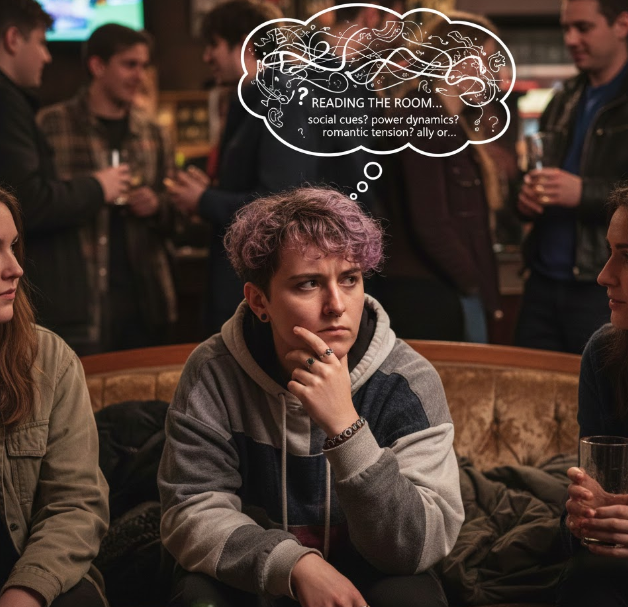
Pattern Awareness Isn’t the Problem — It’s How You Stayed Safe
Pattern awareness can look like:
Reading the emotional temperature of a room the moment you walk in
Noticing subtle shifts in tone, energy, or body language
Tracking who is safe to open up to — and when
Anticipating rejection, withdrawal, or conflict before it happens
Feeling responsible for smoothing things over or staying “one step ahead”
At some point in your life, this awareness worked.
It helped you avoid harm.
It helped you adapt.
It helped you belong — or at least survive.That doesn’t make you “too much.”
It makes you resourceful.
If this is landing for you, you don’t have to sit with it alone. You’re welcome to schedule a free consultation when you’re ready.

Why This Is So Common in LGBTQIA+ Communities
Pattern awareness doesn’t develop in a vacuum.
Many queer and trans adults learned early on that:
Acceptance was conditional
Safety could disappear without warning
Being yourself came with consequences
The rules changed depending on who was watching
When safety is inconsistent, awareness becomes protection.
You learn to scan for cues.
You learn to read between the lines.
You learn to stay alert — because being caught off guard wasn’t an option.
This isn’t anxiety for no reason.
It’s context awareness shaped by lived experience.
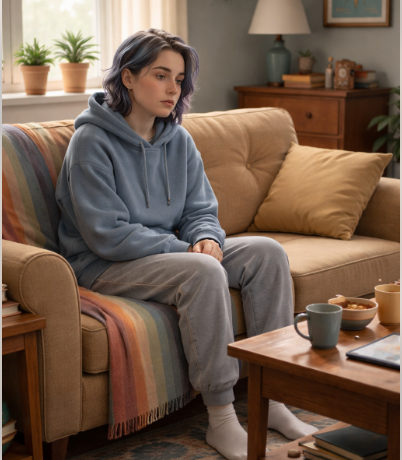
The Nervous System Cost of Always Being Aware
Here’s the part that often gets missed.
Pattern awareness isn’t bad — but it is expensive.
Living in a near-constant state of alertness can lead to:
Chronic exhaustion
Difficulty relaxing or resting fully
Hyper-independence (“I’ll just handle it myself”)
Trouble trusting that support will actually be there
Feeling lonely even when surrounded by people
Your nervous system may stay braced for impact, even in moments that are supposed to feel safe.
Not because you’re broken —
but because your body learned that vigilance kept you alive.
If your nervous system has been carrying this level of awareness for a long time, therapy can help you keep your insight without staying on edge. You can book a free consultation or your first session — whichever feels right.
Book a Consultation or Session

Healing Is Not About Turning Your Awareness Off
This is important.
Healing is not about becoming less perceptive.
It’s not about “stopping” your pattern awareness.
And it’s definitely not about gaslighting yourself into ignoring what you notice.
Healing is about expanding safety — not shrinking yourself.
It’s about helping your nervous system learn that:
You don’t always have to scan
You don’t have to earn rest
You can stay intuitive without staying on edge
You’re allowed to receive support without losing control
You don’t need to unlearn who you are.
You deserve support that helps you carry this awareness more gently.
A Soft Truth to Hold
Pattern awareness isn’t a flaw.
It’s a story your body learned to tell in order to survive.
And you’re allowed to write a new chapter — one where awareness coexists with rest, connection, and safety.
If This Resonates…
If you’ve spent years reading the room, managing emotional dynamics, or staying alert to stay safe — you deserve spaces where your body can finally exhale.
I offer virtual, LGBTQIA+ affirming therapy for adults in Florida, grounded in nervous system awareness, trauma-informed care, and honoring the full context of your lived experience.
You can schedule a free consultation to see if working together feels like a fit.
You don’t need to stop being perceptive to heal.
You deserve support that helps your body feel safe enough to rest.
