
Why Do I Need Constant Reassurance in Relationships? Understanding Anxiety and Attachment
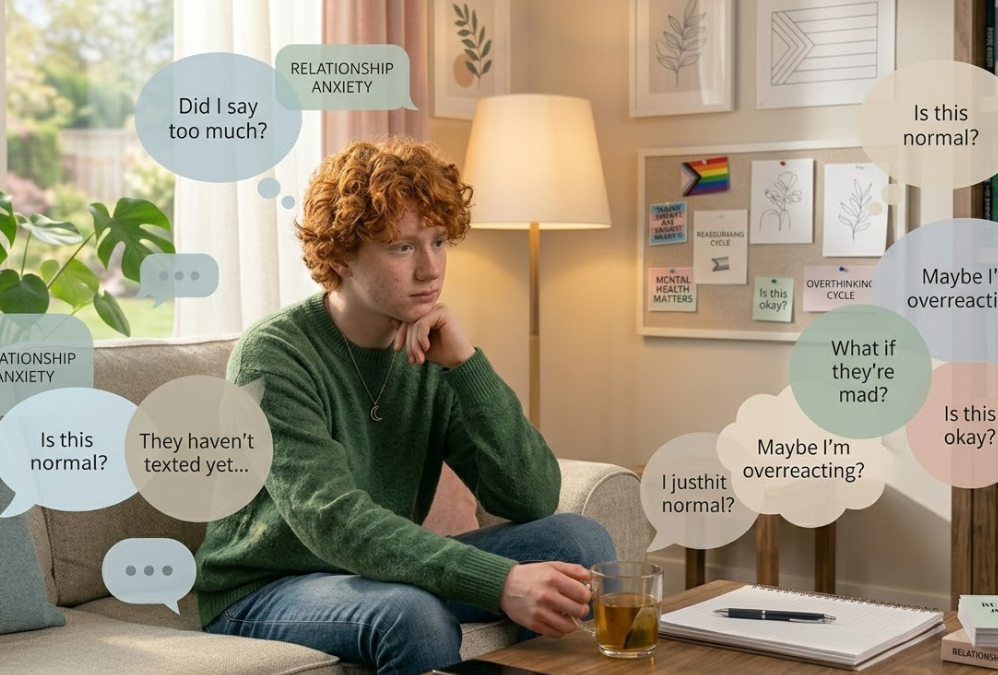
If you find yourself needing constant reassurance in relationships, you are not alone.
Maybe you ask if everything is okay, look for confirmation that someone still cares, or feel a wave of anxiety when communication shifts even slightly. Even when you know things are probably fine, your mind keeps looking for certainty.
For many LGBTQIA+ adults, this pattern is not about being “too much.” It is often connected to anxiety, attachment, and past experiences that made relationships feel uncertain or fragile.
Your Brain Is Trying to Feel Safe
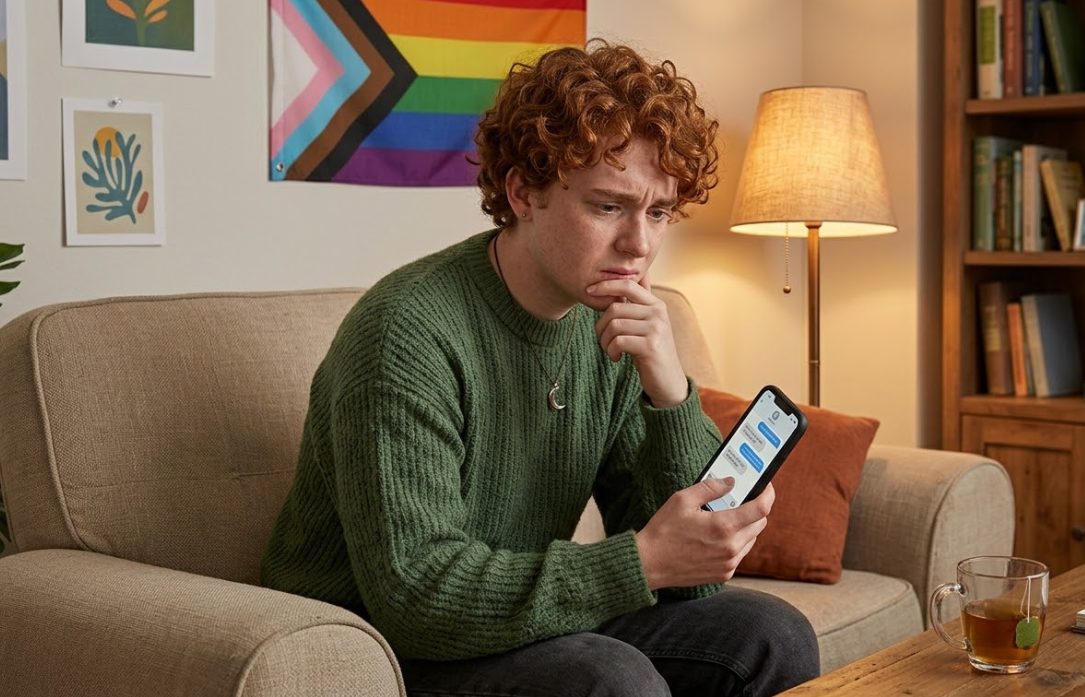
Reassurance-seeking is not random. It is your brain trying to create a sense of safety.
When your mind detects even a small possibility of disconnection, it looks for confirmation that everything is still okay. Asking for reassurance can feel like a quick way to calm that anxiety.
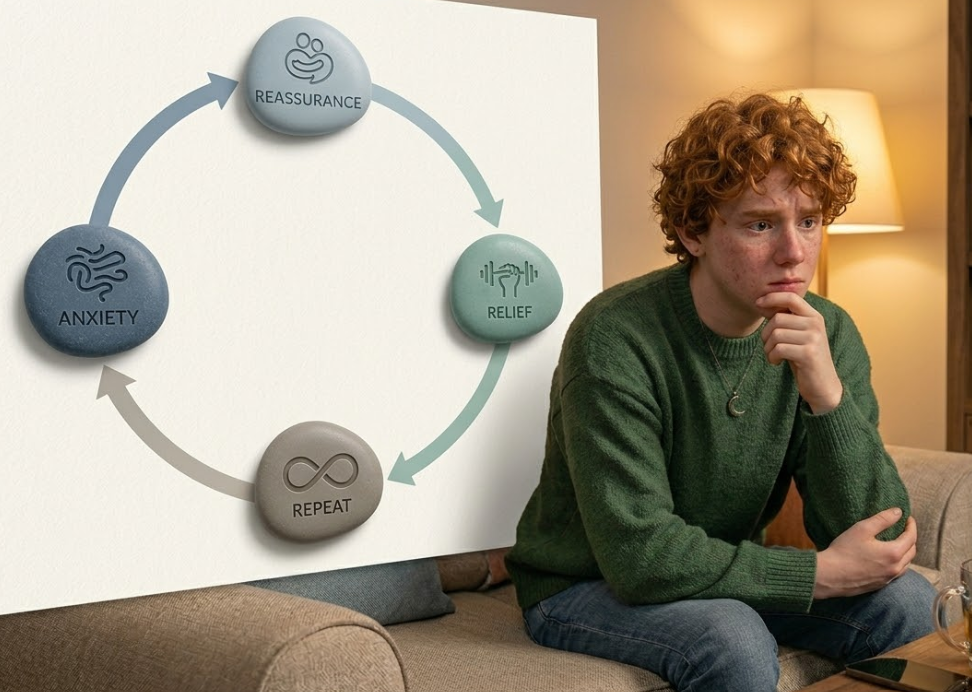
The relief is real, but it usually does not last long. The cycle tends to repeat because the deeper fear has not actually been resolved.
Anxiety and Attachment Patterns Play a Role
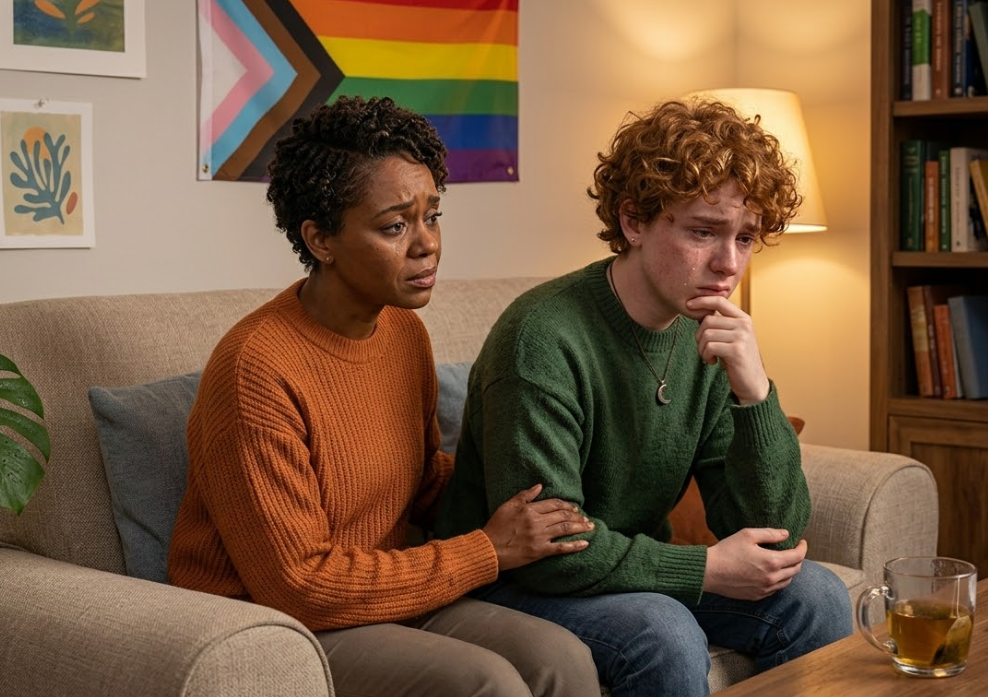
If you have an anxious attachment style, relationships can feel especially high stakes.
You might feel more sensitive to changes in communication, tone, or closeness. Your mind may quickly interpret distance as a sign that something is wrong.
Reassurance becomes a way to stabilize that feeling. It is not about needing “too much.” It is about your nervous system trying to maintain connection.
Rejection Sensitivity Can Make Small Things Feel Big
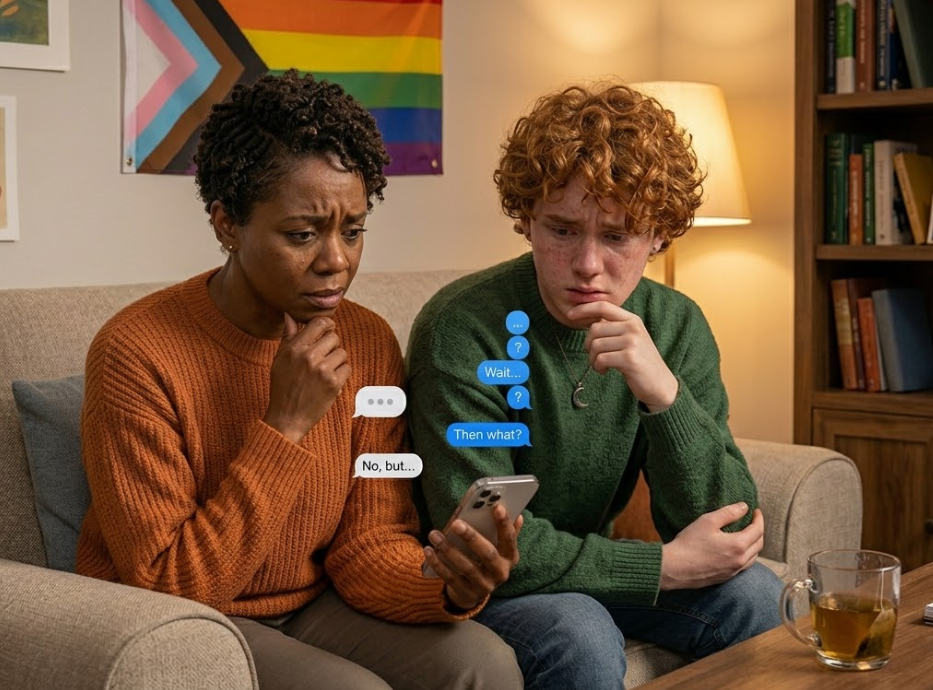
If you are used to feeling rejected, dismissed, or misunderstood, your brain may become highly responsive to potential signs of it happening again.
This is called rejection sensitivity.
A short reply, a delayed response, or a shift in energy can start to feel like confirmation that something is wrong. Reassurance-seeking becomes a way to check if the relationship is still secure.
Even when nothing has actually changed, your body may already be reacting as if it has.

It Can Be Connected to Past Relationship Experiences
For many LGBTQIA+ adults, early experiences with relationships were not always stable or affirming.
You may have experienced:
conditional acceptance
emotional inconsistency
relationships where you had to work to feel secure
Your brain learns from those experiences.
Reassurance-seeking can become a way to prevent those same patterns from happening again, even if your current relationship is different.
Reassurance Helps in the Moment, but Not Long Term
Reassurance works, just not in a lasting way.
When someone reassures you, your nervous system settles temporarily. But because the underlying fear is still there, the need for reassurance often comes back.
Over time, this can create a cycle where:
anxiety rises
reassurance is needed
relief happens briefly
anxiety returns
Breaking this cycle involves building internal safety, not just external confirmation.
What Therapy Can Help You Build Instead
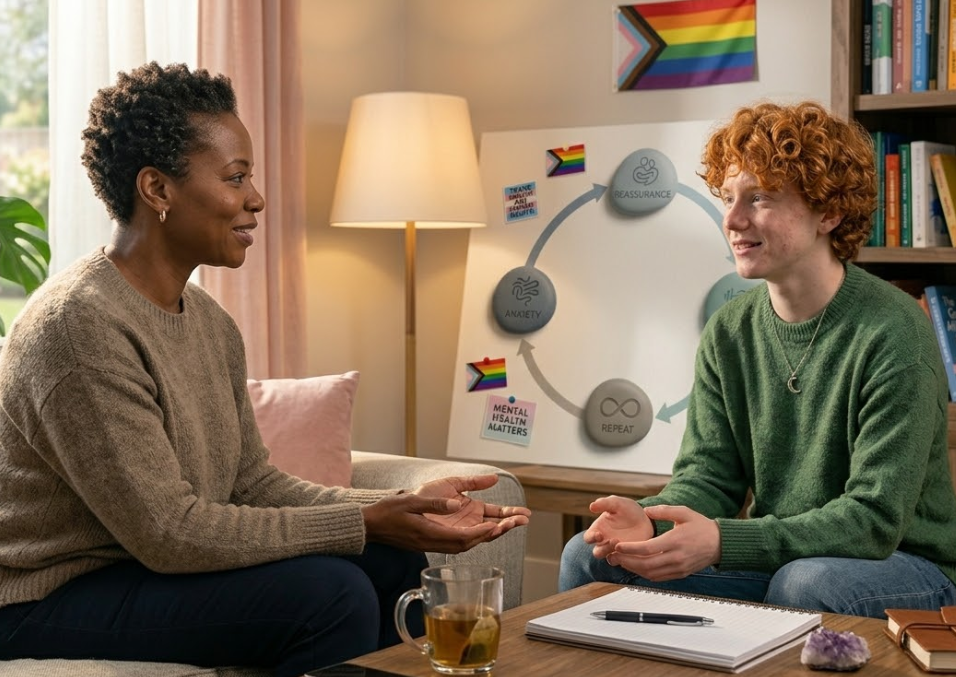
Therapy is not about taking reassurance away from you. It is about helping you feel less dependent on it.
Some of the things we might work on include:
Learning how to notice when anxiety is driving the urge for reassurance
Building tolerance for uncertainty without immediately trying to fix it
Understanding your attachment patterns and how they show up in relationships
Strengthening your ability to self-soothe when anxiety spikes
Practicing boundaries so your needs are expressed clearly and confidently
Over time, the goal is to help your nervous system feel safer in connection, so reassurance becomes a choice rather than something you rely on to feel okay.
A Grounded Reminder
Needing reassurance does not mean you are too much, too needy, or doing relationships wrong.
For many LGBTQIA+ adults, this pattern developed as a way to navigate connection in environments that did not always feel safe or consistent.
Your brain learned to stay close to others by checking, confirming, and trying to prevent loss.
With support, it is possible to build a different kind of safety. One where you can trust your relationships without constantly needing proof, and where your needs and boundaries feel more steady and secure.
A Gentle Next Step
If you are an LGBTQIA+ adult in Florida who feels stuck in cycles of overthinking, reassurance-seeking, or anxiety in relationships, therapy can help you understand what is happening beneath the surface and build more secure ways of connecting.
You do not have to keep managing this on your own. Schedule your free consultation here.
