
Why Being Your Authentic Self Can Feel So Scary
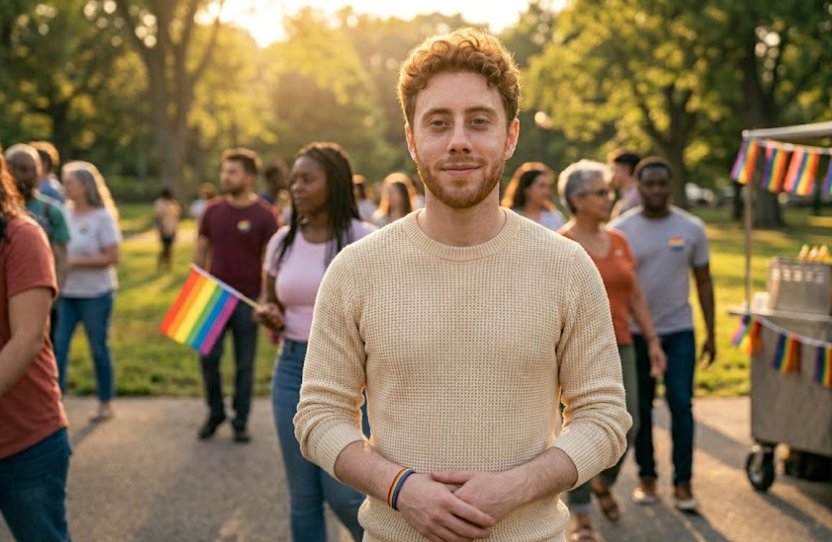
Pride Month is often associated with visibility, self-expression, and authenticity.
But for many LGBTQIA+ adults, being authentic doesn't always feel empowering at first.
Sometimes it feels vulnerable.
Sometimes it feels risky.
Sometimes it feels like asking yourself a terrifying question:
"What happens if people see the real me?"
If you've struggled with relationship anxiety, people pleasing, fear of rejection, or difficulty setting boundaries, that fear may make a lot of sense.
Because authenticity isn't just about expressing who you are.
It's about trusting that you can still belong when you do.

Authenticity can feel risky when acceptance hasn't always felt guaranteed
Many LGBTQIA+ adults learned early on that being themselves wasn't always safe.
Maybe you hid parts of your identity.
Maybe you learned to read the room before speaking.
Maybe you became skilled at adapting yourself to fit what others expected.
These strategies often develop for a reason.
They help us navigate environments where acceptance feels uncertain.
But over time, constantly adjusting yourself can make it difficult to know where adaptation ends and authenticity begins.
And when you've experienced rejection, criticism, or misunderstanding, being fully seen can feel incredibly vulnerable.
This fear often overlaps with fear of abandonment in LGBTQ relationships, where being fully yourself can feel connected to fears of losing connection.
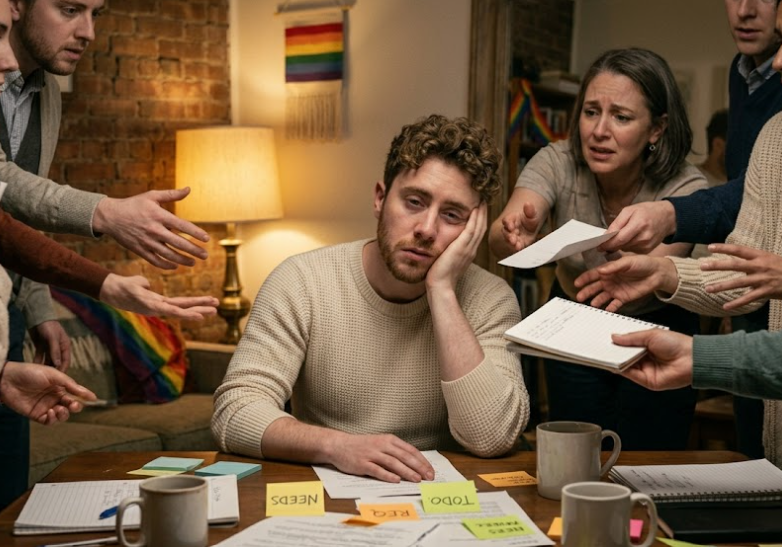
People pleasing often starts as protection
People pleasing is often misunderstood.
It isn't usually about wanting everyone to like you.
It's often about wanting to stay safe.
If keeping the peace reduced conflict, rejection, or discomfort in the past, your nervous system may have learned that prioritizing other people's needs is the safest option.
Over time, that can look like:
Saying yes when you mean no
Avoiding difficult conversations
Hiding your preferences
Making yourself smaller to keep others comfortable
The problem is that eventually, constantly protecting relationships can come at the expense of your relationship with yourself.
This is often connected to feeling responsible for other people's feelings and struggling with setting boundaries without guilt.
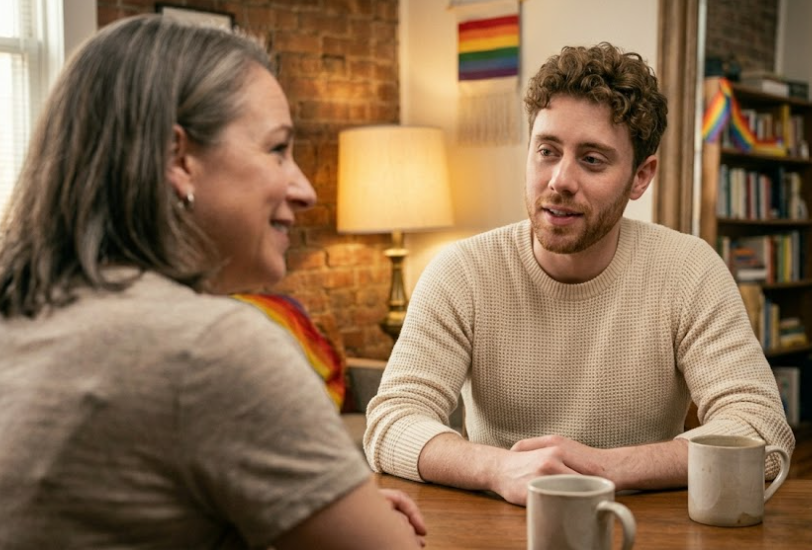
Authenticity isn't saying whatever you want
Sometimes people hear "be yourself" and imagine it means saying whatever comes to mind without considering others.
Authenticity isn't that.
Authenticity is alignment.
It's allowing your actions, boundaries, values, and relationships to reflect who you actually are.
It means:
Expressing your needs honestly
Allowing yourself to have preferences
Setting boundaries when necessary
Showing up as yourself instead of who you think you should be
Authenticity and empathy can exist together.
In fact, healthy relationships often require both.
Learning what healthy boundaries actually look like in relationships can be an important part of becoming more authentic.
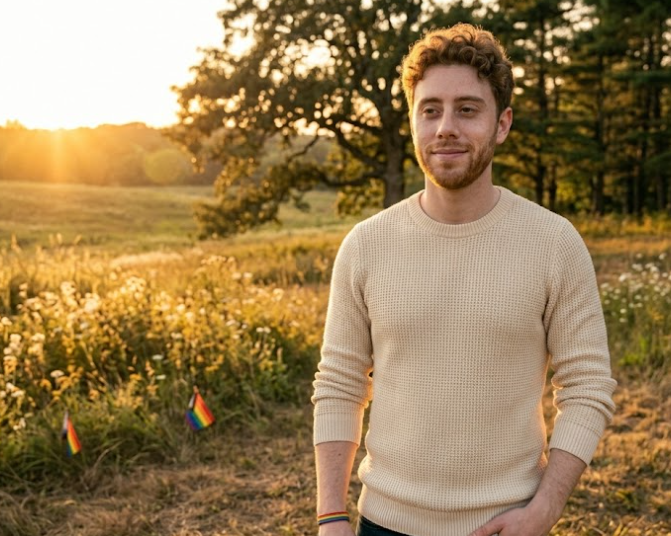
Authenticity gets easier when you trust yourself
One reason authenticity feels scary is because it requires trust.
Not trust that everyone will accept you.
Trust that you'll be okay even if they don't.
That doesn't mean rejection won't hurt.
It means your sense of self isn't entirely dependent on someone else's approval.
As self-trust grows, authenticity often becomes less frightening.
You become more willing to:
Speak honestly
Ask for what you need
Set boundaries
Show up as yourself
Because you're no longer relying on constant external validation to feel secure.
This often happens alongside learning how to trust yourself in relationships, even when anxiety feels loud and discovering what emotional safety actually feels like in a relationship.
A Grounded Reminder
You do not have to earn belonging by becoming someone else.
The right relationships do not require you to abandon yourself to keep them.
Authenticity isn't about being fearless.
It's about choosing to show up as yourself, even when vulnerability feels uncomfortable.
And that choice gets easier with practice.
If You're Ready to Work on This
If fear of rejection, people pleasing, or relationship anxiety have made it difficult to show up authentically, therapy can help you better understand those patterns and build a stronger sense of self-trust.
If it feels like a good fit, you're welcome to schedule a consultation to see how we could work together.
You can also learn more about my work here.
