
What Emotional Safety Actually Feels Like in a Relationship

If you’ve spent a long time navigating relationship anxiety, people pleasing, or feeling responsible for other people’s emotions, emotional safety can feel… unfamiliar.
Sometimes when people first experience a healthier relationship, they don’t immediately feel calm. They feel uncertain. Suspicious. Waiting for something to go wrong.
Because when your nervous system is used to unpredictability, safety can feel strange at first.
Let’s talk about what emotional safety actually looks and feels like in relationships.
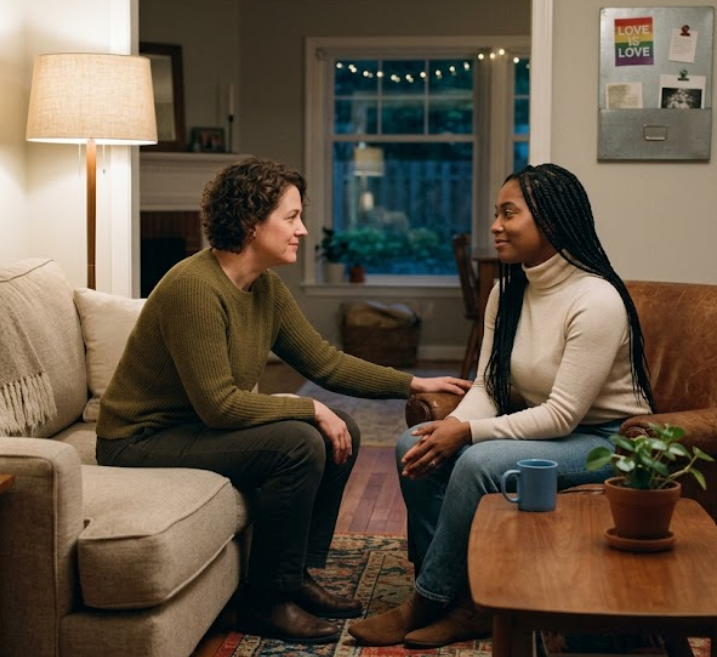
Emotional safety doesn’t mean the relationship is conflict-free
A common misconception is that healthy relationships never involve disagreements.
They do.
Emotional safety isn’t about avoiding conflict. It’s about knowing conflict doesn’t automatically mean rejection, abandonment, or punishment.
In emotionally safe relationships, you can:
Express discomfort
Disagree
Ask questions
Need space
…without constantly fearing the connection will disappear.
That doesn’t mean conflict feels easy.
It means conflict doesn’t feel dangerous.

You don’t have to constantly monitor yourself
When relationships haven’t felt emotionally safe in the past, many people become hyperaware.
You may:
Overthink texts
Replay conversations
Change your wording to avoid upsetting someone
Question whether your needs are “too much”
These patterns often show up when you’ve spent a long time walking on eggshells in relationships, trying to predict reactions or avoid conflict.
That kind of self-monitoring is exhausting.
Emotional safety often feels quieter.
You notice:
You’re explaining yourself less
You’re bracing less
You’re spending less energy trying to predict reactions
You start feeling more like yourself.

Emotional safety means your feelings are allowed to exist
Not every feeling needs fixing immediately.
Not every emotion needs defending.
In emotionally safe relationships, your feelings aren’t automatically dismissed, minimized, or turned against you.
That doesn’t mean someone agrees with every feeling you have.
It means there’s room for your experience.
You can say:
“That hurt me”
“I’m feeling anxious”
“I need reassurance”
“I need some space”
…without feeling ashamed for having needs in the first place.

Emotional safety often feels less intense, not more
This part surprises people.
Sometimes unhealthy dynamics feel intense:
Constant uncertainty
High highs and low lows
Needing reassurance to feel okay
And because intensity feels familiar, safety can initially feel unfamiliar.
Maybe even boring.
But emotional safety usually looks more like:
Consistency
Repair after conflict
Honesty
Feeling able to be yourself without constantly earning connection
Safety doesn’t eliminate anxiety overnight.
But over time, your nervous system may stop expecting danger everywhere.
A Gentle Reminder
If emotional safety feels unfamiliar, it doesn’t mean you’re broken.
Sometimes it means your nervous system learned to expect unpredictability.
Learning what safety feels like in relationships can take time.
And learning to trust that safety can take even longer.
You deserve relationships where you don’t have to constantly monitor yourself, shrink yourself, or earn connection by abandoning your own needs.
If You’re Ready to Work on This
If relationship anxiety, people pleasing, or fear of rejection have made emotional safety feel difficult to recognize or trust, therapy can help you explore those patterns and build relationships that feel more grounded and sustainable.
If it feels like a good fit, you’re welcome to schedule a consultation to see how we could work together.
