
Pattern Awareness Isn’t the Problem — Hypervigilance Is
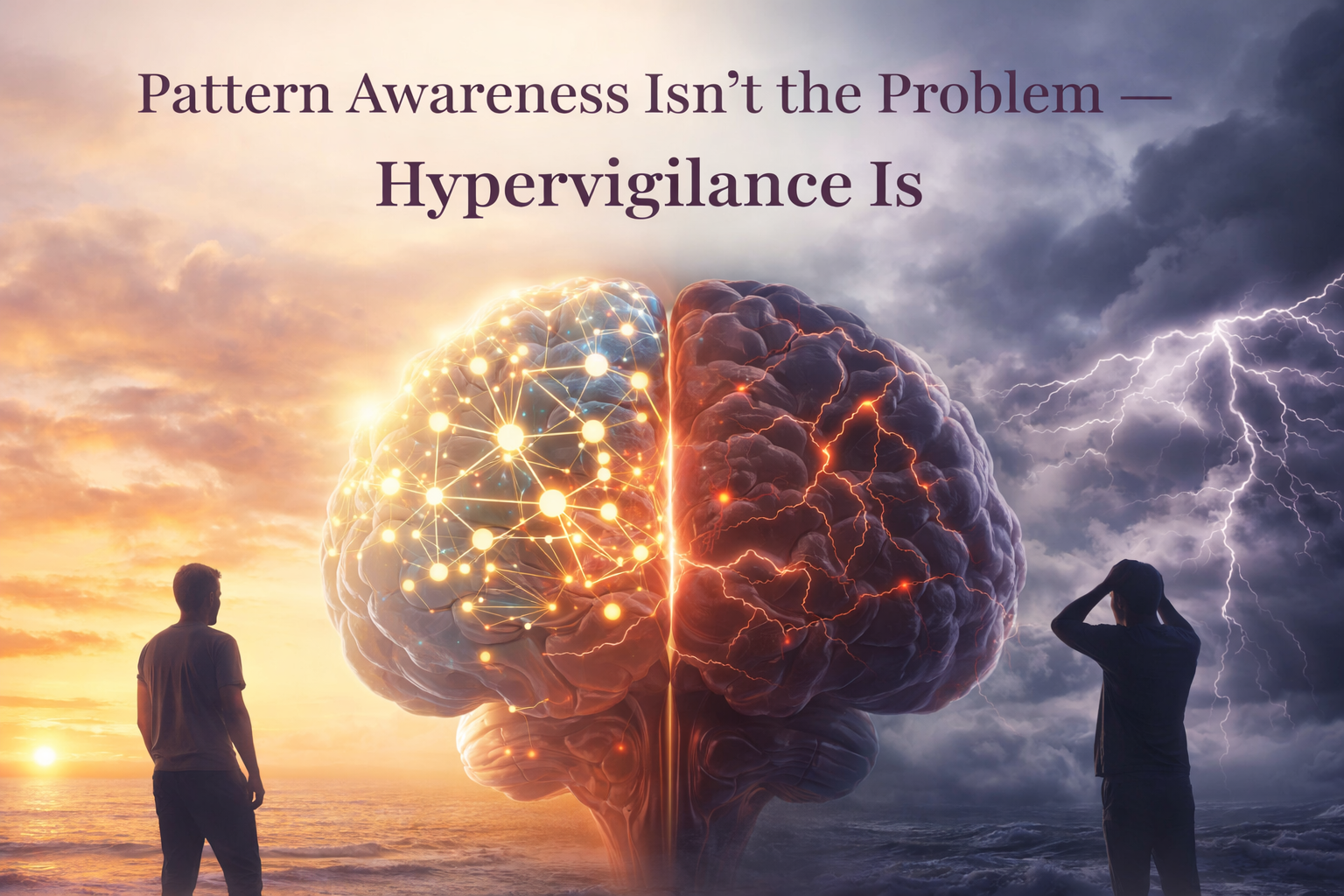
A lot of people I work with say some version of this:
“I’m really self-aware… but I’m exhausted.”
They notice patterns quickly. They can track emotional shifts in themselves and others. They read the room, anticipate reactions, and connect dots most people miss.
And yet, they rarely feel at ease.
Instead of self-awareness feeling grounding, it starts to feel relentless — like their mind never fully turns off. There’s always something to analyze, something to monitor, something to stay ahead of.
If this sounds familiar, it’s worth naming something important:
pattern awareness itself isn’t the problem.
What often becomes exhausting is when awareness turns into hypervigilance.

Pattern Awareness Is Often a Survival Skill
For many queer and trans adults, pattern awareness didn’t develop out of curiosity or introspection — it developed out of necessity.
It might have looked like:
reading tone shifts to assess safety
tracking moods to avoid conflict
noticing micro-changes in how people respond
scanning environments for subtle signs of threat or acceptance
This kind of awareness is adaptive. It’s intelligent. It helped you navigate spaces where safety wasn’t guaranteed.
So if you’re highly attuned, observant, and quick to notice patterns, that doesn’t mean something is wrong with you. It often means your nervous system learned how to keep you safe.

When Awareness Turns Into Hypervigilance
The shift happens quietly.
What starts as awareness becomes:
constant scanning
difficulty relaxing, even when things are okay
analyzing every interaction after the fact
feeling responsible for preventing discomfort, conflict, or harm
Hypervigilance isn’t just noticing patterns — it’s feeling like you have to stay on at all times. Like if you stop paying attention, something bad might happen.
Over time, this can lead to:
burnout
anxiety that feels hard to name
difficulty resting or being present
a sense that healing itself has become another job
This is often where people start to feel frustrated with themselves. “I know better. I’ve done the work. Why can’t I just relax?”
But hypervigilance isn’t a failure of insight. It’s a nervous system that hasn’t had enough safety or support to stand down.

The Cost of Living in Surveillance Mode
Living in a state of constant monitoring takes a toll.
When your system is always scanning, it becomes harder to:
feel settled in your body
trust moments of calm
distinguish real danger from old threat patterns
enjoy rest without guilt or anxiety
Insight alone doesn’t regulate the nervous system. You can understand why you’re hypervigilant and still feel unable to turn it off.
That’s not because you’re doing healing wrong. It’s because awareness without support often leads to more effort, not more ease.

Letting Go of Hypervigilance Doesn’t Mean Losing Discernment
This is the fear that keeps many people stuck.
If I stop scanning, will I miss something important?
If I soften, will I become naïve or unsafe?
If I’m not constantly aware, who am I?
Here’s the distinction that matters:
Discernment is flexible and contextual. It turns on when needed and rests when it’s not.
Hypervigilance is global and exhausting. It stays on regardless of context.
Healing isn’t about becoming less aware — it’s about developing the capacity to move between awareness and rest. To notice patterns without having to monitor constantly.
That flexibility is what safety feels like in the nervous system.

What Support Makes Possible
Hypervigilance doesn’t usually soften through willpower. It softens in relationship.
Support — especially therapeutic support — creates space for your nervous system to experience something different:
being witnessed without being evaluated
noticing without immediately reacting
practicing awareness and rest at the same time
Therapy isn’t about taking away your insight or intelligence. It’s about helping your system learn that it doesn’t have to do all the protecting alone.
If you’re curious about exploring this work in a way that’s paced, supportive, and respectful of how your awareness developed, you can learn more about scheduling a free consultation here.
If you’re curious about exploring this work in a way that’s paced, supportive, and respectful of how your awareness developed, you can learn more about scheduling a free consultation here.
You Don’t Have to Be “On” All the Time
If you’re highly self-aware and deeply tired, you’re not broken. You’re not overthinking for no reason. And you’re not failing at healing.
Pattern awareness helped you survive.
Hypervigilance helped you cope.
And now, it might be time to explore what safety could feel like without constant monitoring.
Healing doesn’t require you to give up your discernment.
It invites you to rest from surveillance.
Healing doesn’t require you to give up your discernment.
It invites you to rest from surveillance.
