
Why Do I Feel Guilty Setting Boundaries? LGBTQ Anxiety and Shame Explained
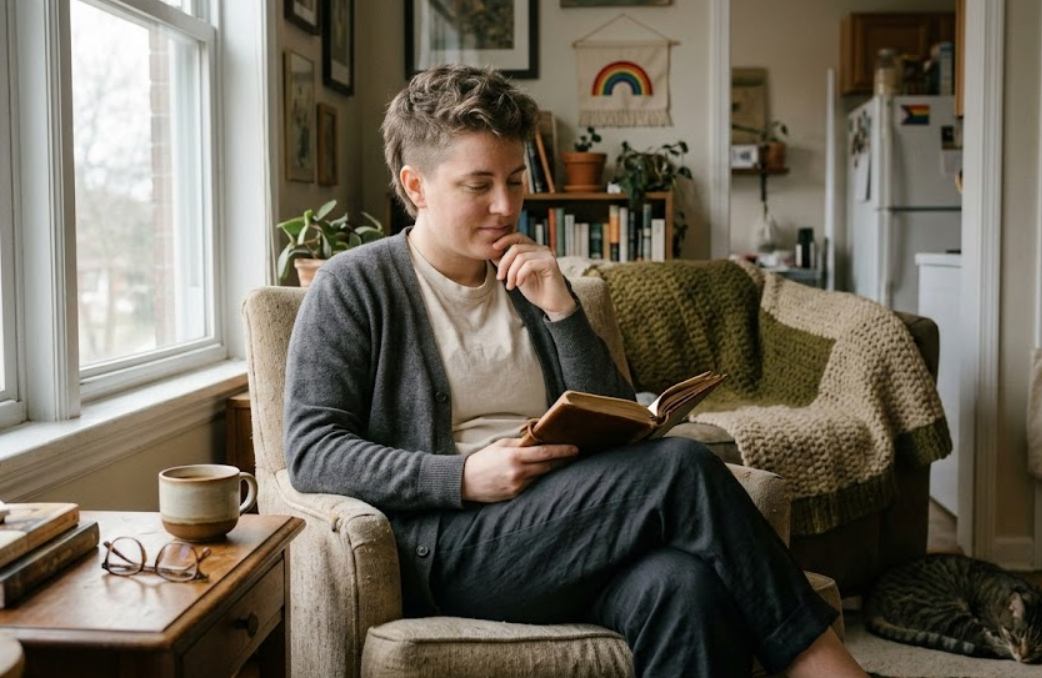
If you have ever set a boundary and then immediately felt guilty about it, you are not alone. A lot of people assume that guilt means they did something wrong. But for many LGBTQIA+ adults, guilt after setting a boundary has less to do with morality and more to do with anxiety and old survival patterns.
You might say no to something you genuinely do not have capacity for, and within minutes your mind starts questioning you. Was that too harsh? Are they upset? Did I overreact? Should I explain myself more?
That spiral is familiar for a reason.

When Guilt Is Really Anxiety
Guilt does not always mean you crossed a line. Sometimes it simply means you stepped outside a pattern your nervous system learned long ago.
If you grew up feeling like belonging was conditional, your body may have learned that keeping relationships stable was the priority. That can look like minimizing your needs, staying agreeable, avoiding conflict, or becoming very attuned to other people’s emotions.
In that context, setting a boundary is not just communication. It is disruption. And disruption can feel dangerous, even when the relationship is safe.
Your nervous system may interpret a boundary as a risk of rejection or disconnection. The guilt that follows is often anxiety in disguise.
The LGBTQIA+ Layer of Shame
There is also an additional layer many LGBTQIA+ adults carry, and that is shame.
Guilt says, “I did something wrong.”
Shame says, “I am wrong.”
If you have ever received messages, directly or indirectly, that your identity was too much, inappropriate, inconvenient, or confusing for others, that messaging can linger beneath the surface. So when you assert a need or limit, it may activate something deeper than the current situation.
Instead of thinking, “I need space,” your mind might shift into, “I am being difficult,” or “I am asking for too much.”
That is not objective truth. That is old shame getting stirred up.
Why It Feels So Physical
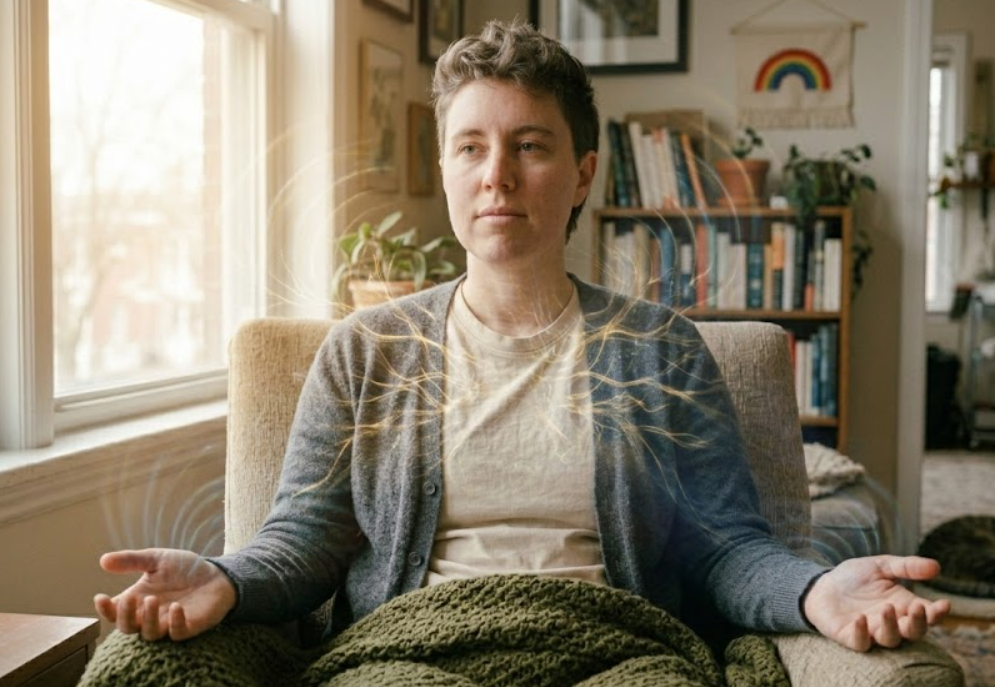
For many people, the guilt after boundary setting is not just mental. It is physical. You might feel tightness in your chest, an urge to send a follow-up text to soften what you said, or a compulsion to replay the conversation over and over.
Your body is scanning for signs that the relationship is still intact.
This is where it can help to pause rather than immediately undoing your boundary. You can ask yourself a few grounding questions. Did I communicate respectfully? Is this boundary aligned with my values? Would I expect someone else to tolerate what I have been tolerating?
Often the answers reveal that nothing harmful occurred. What happened is that you stepped outside an old pattern.
Healthy guilt usually points toward repair when harm was done. Anxiety-driven guilt pushes you toward self-abandonment. Learning to tell the difference is an important part of growth.
You Are Not Selfish for Having Limits
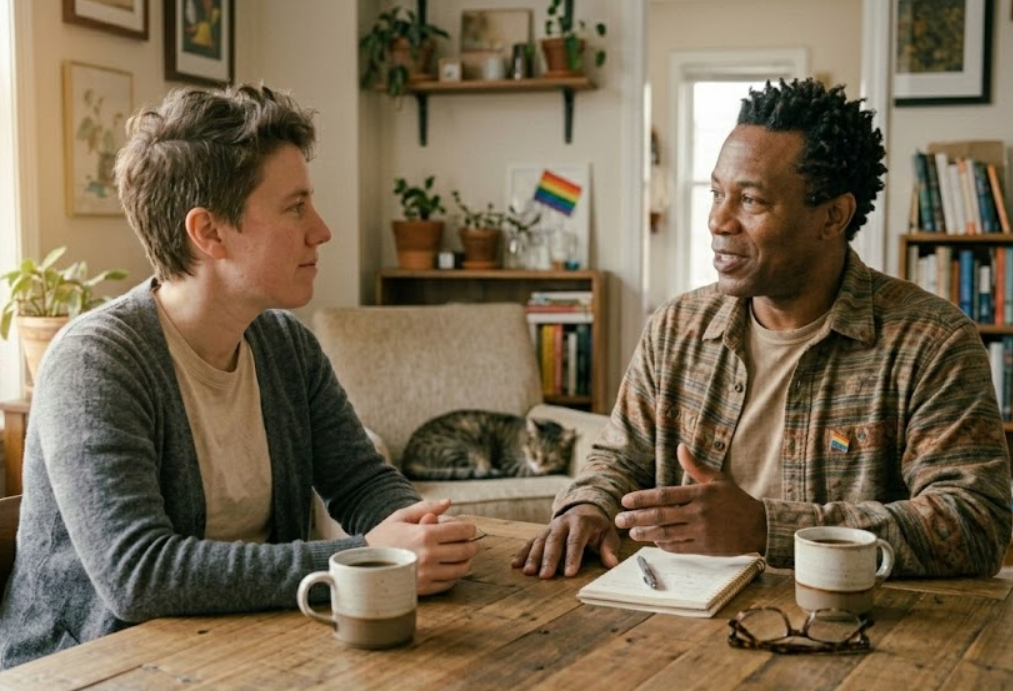
It is common for people who struggle with people pleasing to equate boundaries with selfishness. But boundaries are not punishments. They are capacity protectors. They allow relationships to be sustainable rather than resentful.
If you consistently feel anxious, exhausted, or overextended in your relationships, that is information. It does not mean you are failing. It may mean something needs to shift.
You are allowed to say no without overexplaining. You are allowed to ask for consistency. You are allowed to take space when you need it. None of that makes you unkind.
A Grounding Reminder
If guilt makes it hard to hold onto your boundaries, that does not mean you are selfish. It means your system learned that staying connected required self-protection.
You are not broken for having that response. You adapted.
You do not have to become confrontational to become assertive. You can learn to stay connected to yourself while staying connected to others. Boundaries do not have to feel like explosions. They can feel steady. They can feel aligned. They can feel like self-respect.
You deserve relationships where you can remain present without disappearing.
Ready for Support?
If you are in Florida and looking for LGBTQIA+ affirming therapy focused on anxiety, shame, and relational boundaries, I offer virtual therapy for adults across the state.
You can schedule a consultation when you are ready.
